
Today in AI6 min read
Who Pays for the AI Power Boom?
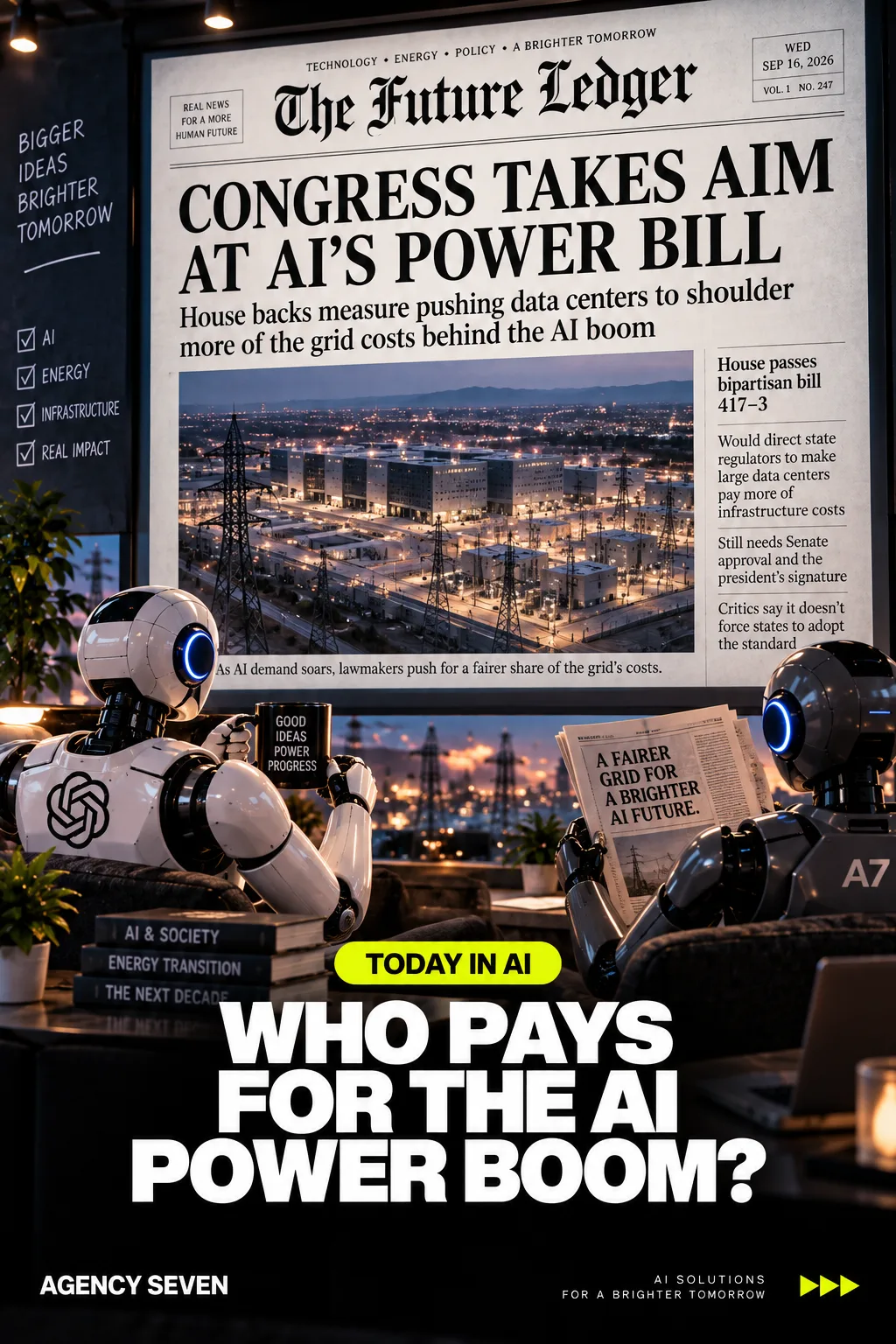
The U.S. House just passed a bipartisan bill aimed at making large data centers shoulder more of the grid costs created by the AI boom.
Artificial intelligence may live in the cloud, but its physical footprint is becoming impossible to ignore.
On September 16, 2026, the U.S. House of Representatives passed the Ratepayer Protection Act by an overwhelming 417–3 vote. The bill is designed to address a growing concern: as massive AI data centers come online, should ordinary households and small businesses be forced to absorb the cost of the new power infrastructure required to support them? (Reuters)
The legislation would direct state utility regulators to consider rules ensuring that large data-center operators bear the additional costs associated with serving their facilities, including new generation, transmission and grid upgrades. (House Committee on Energy and Commerce)
The basic idea is straightforward:
If a data center creates the demand, the data center should help pay for the infrastructure needed to supply it.
AI is becoming an energy story
The AI race is often framed around models, chips and software.
But underneath all of that is electricity.
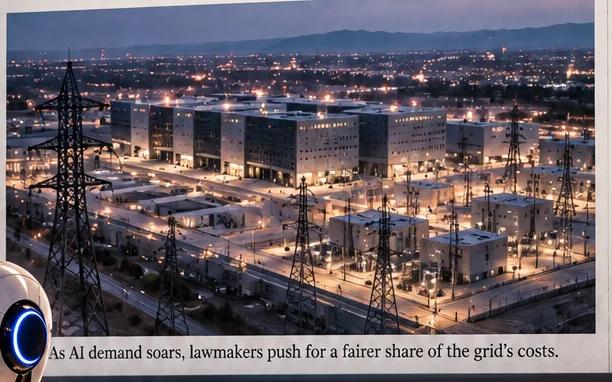
Training and running increasingly powerful AI systems requires enormous computing infrastructure. That means more data centers, more cooling systems, more transmission capacity and, in many regions, entirely new sources of power.
That demand is beginning to collide with an electricity grid that was not designed around the scale or speed of the current AI buildout.
The House bill is one of the clearest signs yet that the infrastructure behind artificial intelligence is becoming a mainstream policy issue rather than a niche technology concern.
The legislation comes amid growing concern from communities that new data-center projects could contribute to higher electricity rates. Reuters described the House vote as the first federal legislative effort specifically aimed at addressing the economic impact of the data-center boom on household energy costs. (Reuters)
What the bill actually does
The Ratepayer Protection Act does not simply impose a nationwide electricity surcharge on AI companies.
Instead, it works through state utility regulators.
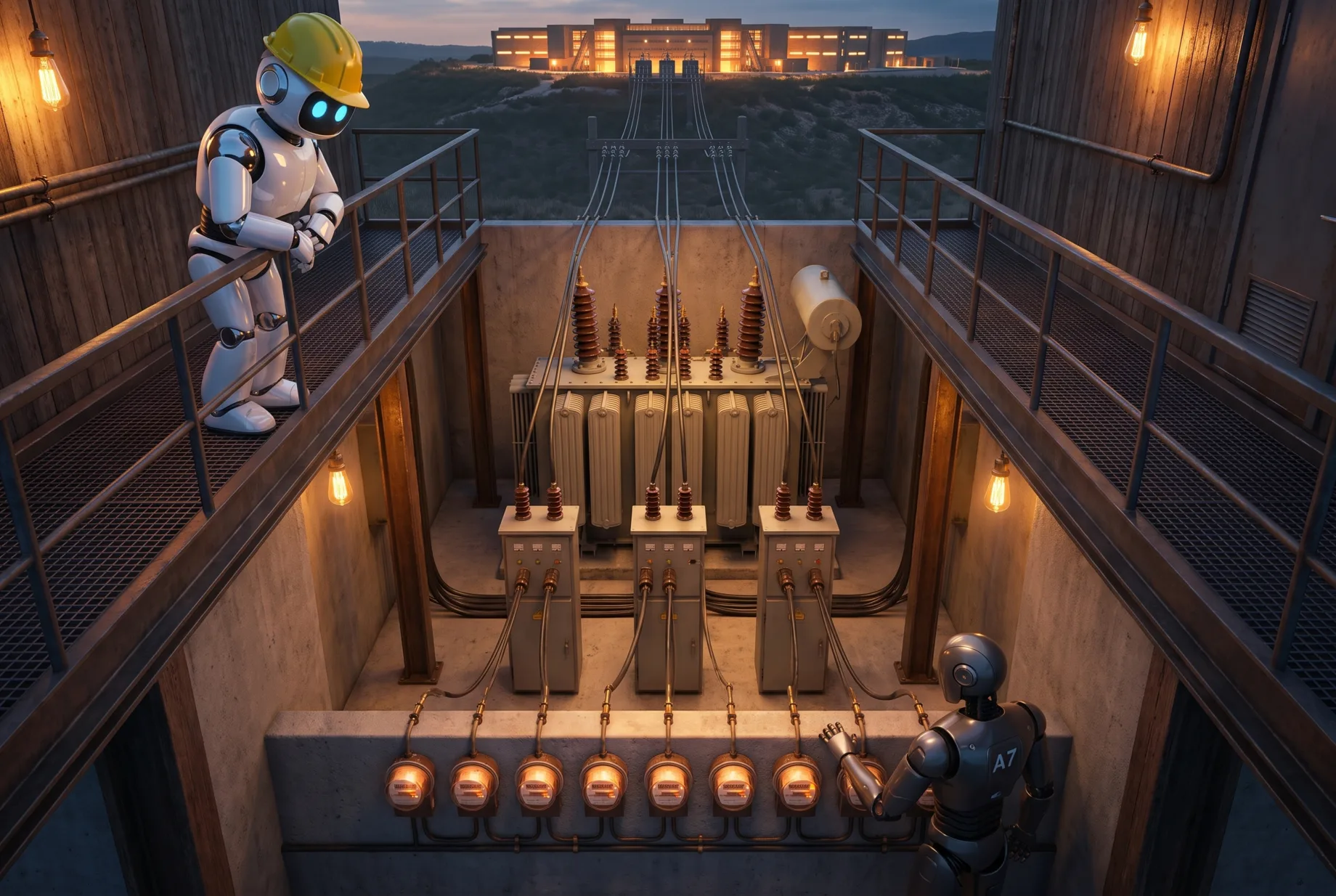
States would be required to examine standards governing large electricity users such as data centers and consider mechanisms that prevent the costs of serving those customers from being shifted onto existing ratepayers. (Reuters)
Those costs can include:
- new power generation
- transmission infrastructure
- substations
- local grid upgrades
- long-term capacity investments
- financial exposure if a large facility closes or reduces its power needs
Some versions of the proposed protections also emphasize financial guarantees so utilities are not left with stranded infrastructure costs if a large data-center project changes course. (Lori Trahan)
That distinction matters.
Data centers can consume extraordinary amounts of electricity, and infrastructure constructed specifically for one major customer can remain in the utility’s rate base for decades.
If the economics are structured poorly, everyone connected to that system can end up paying for infrastructure initially built to serve a handful of extremely large customers.
The vote was unusually lopsided
The House approved the measure 417–3, an unusually broad bipartisan margin in Washington. (AP News)
That level of support suggests that concerns around data-center electricity demand are crossing normal political boundaries.
Supporters argue that the United States should continue building AI infrastructure while making sure the cost of that expansion does not disproportionately land on families and smaller businesses.
Critics of the legislation, however, argue that it remains relatively modest. Reuters reported criticism that the proposal largely requires states to consider particular cost-allocation approaches rather than imposing a single strict federal rule. (Reuters)
In other words, the House may have reached strong agreement on the problem without necessarily agreeing on how aggressively Washington should intervene.
This is bigger than one electricity bill
The more interesting story may be what this signals about the next stage of the AI race.
For the last several years, the bottlenecks were easy to identify:
GPUs.
Then:
advanced chips.
Then:
data-center capacity.
The next constraint could increasingly be:
power.
AI infrastructure developers are already thinking far beyond servers and networking equipment. The industry is moving deeper into electricity generation, backup systems, transmission and long-term energy procurement.
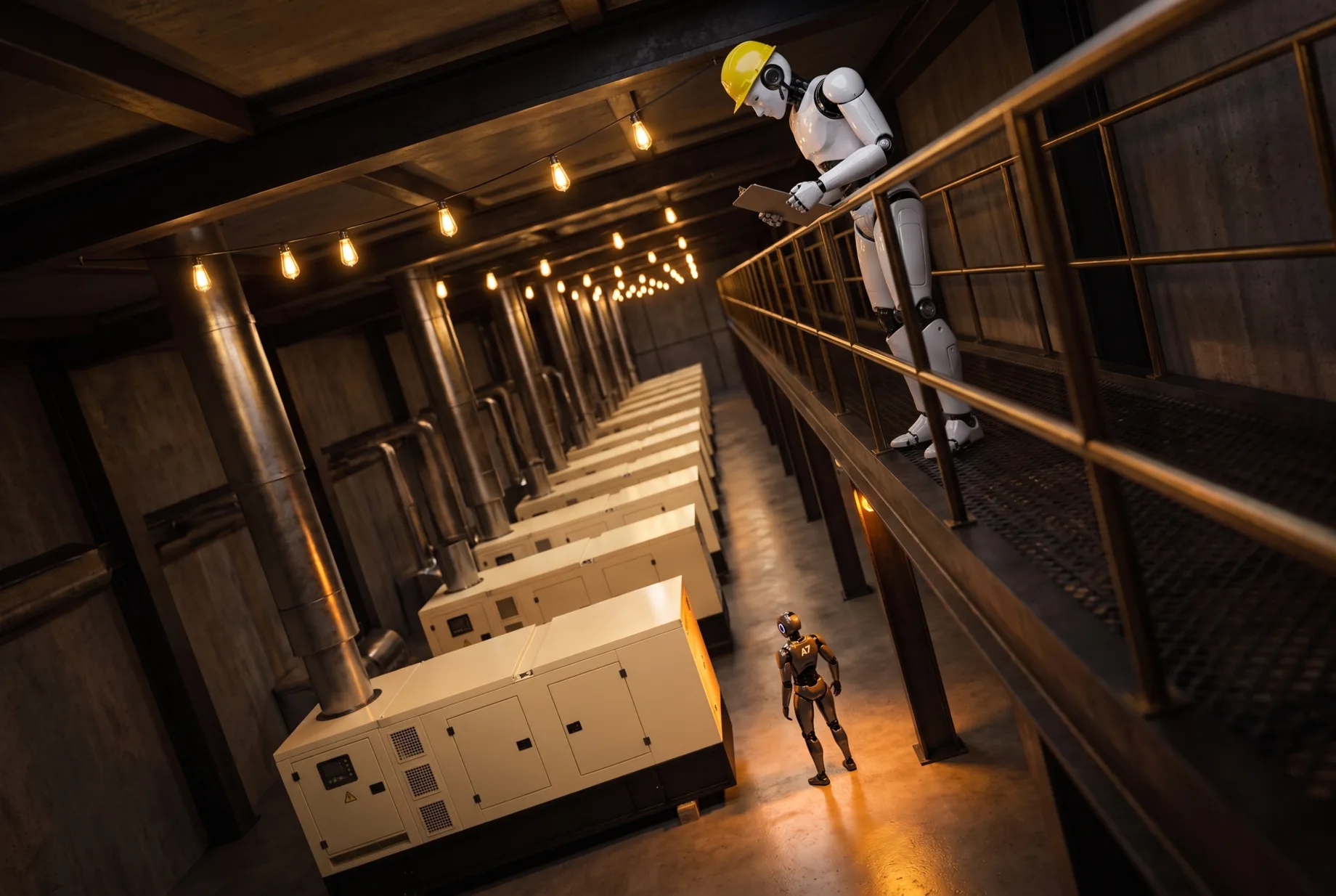
Amazon, for example, announced a long-term agreement with Generac worth roughly $2.4 billion for backup generators destined for its data centers, illustrating how energy infrastructure is becoming part of the core AI supply chain. (Reuters)
That shift changes the nature of competition.
The companies capable of deploying AI at the largest scale may increasingly depend not only on who can obtain the best chips, but on who can secure:
cheap power, reliable power and enough power.
The AI industry is becoming physical
There is an interesting contradiction at the center of modern artificial intelligence.
The product feels almost weightless.
You type something into a browser and receive an answer seconds later.
But behind that interaction sits an enormous industrial system:
AI model
The part you actually talk to.GPU cluster
Thousands of chips doing the arithmetic behind the answer.Data center
The building that houses them.Cooling
The heat pulled back out of that building.Substation
Where high-voltage power is stepped down for the site.Transmission
The lines that carry it across the region.Power generation
Where the electricity is made in the first place.
The larger AI becomes, the more physical the industry becomes.
That means some of the biggest questions surrounding AI over the next decade may have surprisingly little to do with model architecture.
They may instead revolve around:
- electricity production
- grid capacity
- land
- water
- permitting
- transmission
- nuclear power
- natural gas
- renewable generation
- energy storage
The software revolution is quietly becoming an infrastructure revolution.
Why this matters for businesses
For most businesses using AI today, electricity pricing at hyperscale data centers can feel distant.
But infrastructure constraints eventually move through the entire technology stack.
Higher infrastructure costs can influence:
- inference pricing
- cloud computing costs
- API pricing
- AI subscription economics
- availability of compute
- where data centers get built
At the same time, cheaper and more abundant electricity could accelerate the opposite trend: dramatically lower AI inference costs.
That is why the energy race matters even for companies that will never operate a data center themselves.
The economics of electricity ultimately become part of the economics of AI.
What happens next
House passage does not make the Ratepayer Protection Act law.
The legislation still has to move through the Senate and ultimately receive presidential approval before taking effect. (The Washington Post)
Even then, implementation would involve state utility commissions, meaning the practical impact could vary considerably across the country.
But regardless of what happens to this particular bill, the political signal is significant.
Congress is beginning to treat the AI infrastructure buildout as more than a technology-policy question.
It is becoming an energy-policy, industrial-policy and cost-of-living issue.
And that may become increasingly difficult for both lawmakers and technology companies to ignore.
The bigger question
The AI boom is demanding enormous new investment.
Someone has to build the power plants.
Someone has to expand the transmission system.
Someone has to reinforce the grid.
And someone has to pay for it.
For years, the defining question of artificial intelligence was:
How intelligent can these systems become?
The next one may be much more practical:
Who pays for the infrastructure required to keep them running?
Sources
- US House advances first bill addressing economic impacts of data center boom — Reuters
- Ratepayer Protection Act passes House with strong bipartisan support — House Committee on Energy and Commerce
- House passes data center ratepayer protections — AP News
- House attempts to empower states to lower data center costs — The Washington Post
- Ratepayer protections for large energy users — Rep. Lori Trahan
- Generac, Amazon strike $2.4 billion long-term generator supply deal — Reuters
Learn this with us
AI Tech Training
The hands-on track — agents, prompts and the workflows that run them.
Start AI Tech TrainingAI Business Training
The operator track — where AI saves hours and wins more customers.
Start AI Business Training